What happened to all the AI browsers?
They were all over the place. Now their parent companies are chasing something else.
Arc. Dia. Comet. Atlas.
These are all AI browsers that were going to change how we used the internet and how the internet was architected. I'm not going to lie, I was really excited about these. But I think the hype won out, and believe it or not, I'm writing this on... Safari.
So what happened? I can't really answer that for everyone else, but I can share what happened with my use of these browsers, why I was excited, and why I ultimately just stopped using them.
They were the priority until they weren't
The rise and fall (for most) of these AI browsers is a clear representation of what these companies are chasing: money.
Arc started as a browser that was going to change the internet. It asked questions like "what if the web was your operating system," which, at the time, gave me a little bit of hope for what the internet could be (or go back to).
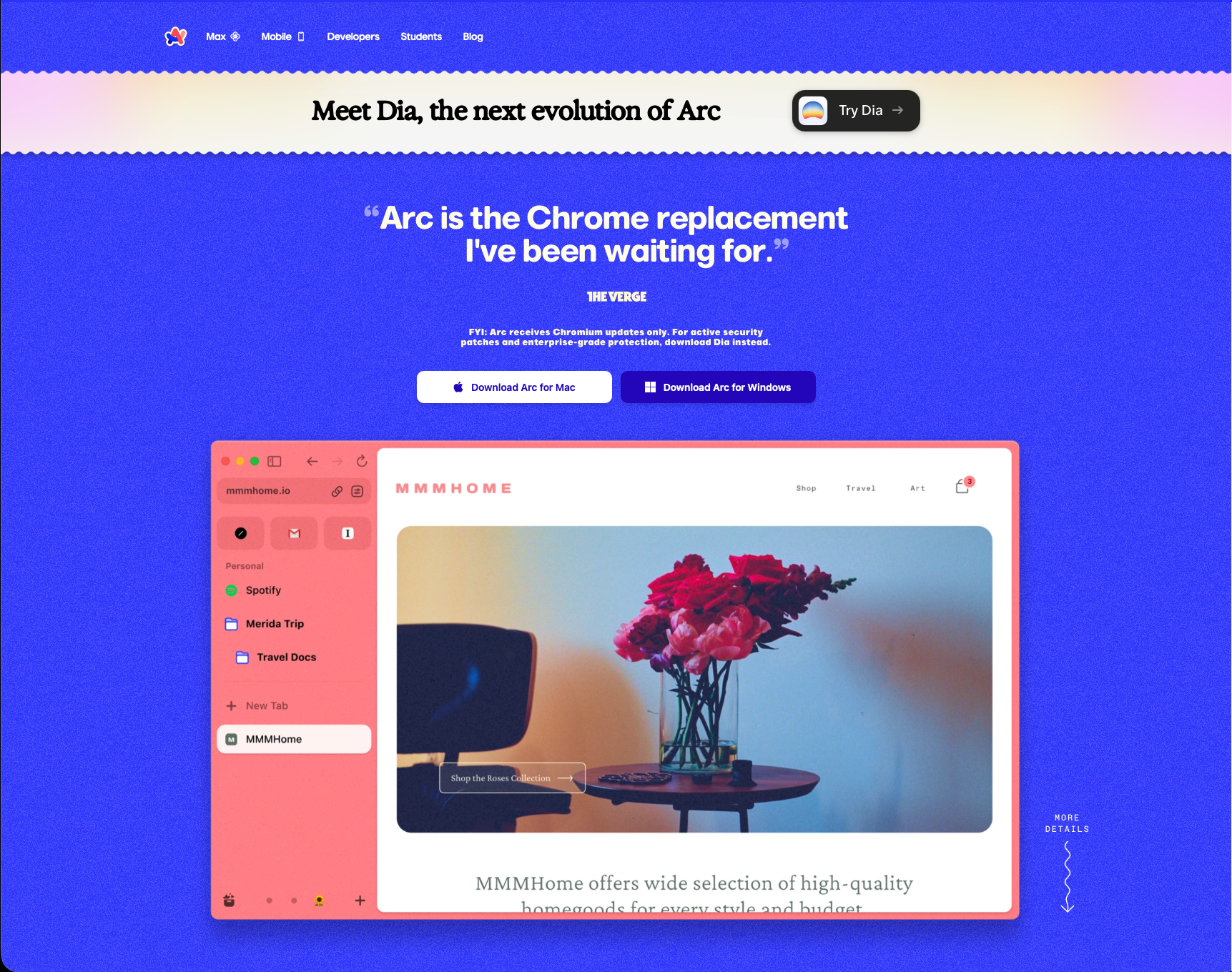
Arc was packing feature after feature, which is part of why The Browser Company eventually paused active development on Arc entirely to focus on a new AI-first product called Dia. CEO Josh Miller put it bluntly: Arc was "too different, with too many new things to learn, for too little reward," and it "lacked cohesion, in both its core features and core value." The numbers backed him up. According to reporting on the shift, some of Arc's most-hyped features, like Spaces, were only used by 5 to 12 percent of users, and the company was reportedly burning around $30 million a year building things almost nobody touched.
The community didn't take it well, either. One longtime Arc user summed up the reaction: "Dia is just a huge slap in the face to Arc users. Arc had momentum and character, and instead of doubling down, they just left us hanging."
If the companies building these products weren't prioritizing their own products, why should I keep spending my time and resources adjusting to this new "agentic internet" that's one blog post away from being sunset in pursuit of the next new thing?
There was nothing really "new"
Sure, you had AI chatbots in your browser now, but if you ever entered a prompt that required the AI to use your browser for you, you quickly saw it click around, fail, refresh, click around, and use your browser just like a human, except slower and less reliable.
This wasn't just my experience. OpenAI actually discontinued its earlier "Operator" agent after acknowledging that vision-based, click-by-click automation just wasn't reliable enough for production use. As one industry writeup put it, computer-use models "perceive and act like humans do," analyzing the screen like an image and clicking at coordinates, which is powerful in theory but fragile in practice. Even OpenAI's own support forum has users reporting Atlas's agent mode failing outright with nothing more than a generic error message.
They take up a lot of space, memory, and resources
As I was downloading all these browsers, I quickly found myself hitting my already slim MacBook Pro's RAM and SSD space limits, the latter of which was odd, because it's not like I was downloading anything. However, I quickly learned how much RAM and storage these browsers take up, largely because of how much they cache in the background to power their AI features.
Dia was the clearest example. One in-depth review found that RAM usage climbs noticeably above a standard Chromium baseline whenever Dia's "Memory" feature is actively scanning open tabs, with users on 8GB M1 Macs reporting real slowdowns once they hit 30-plus tabs.
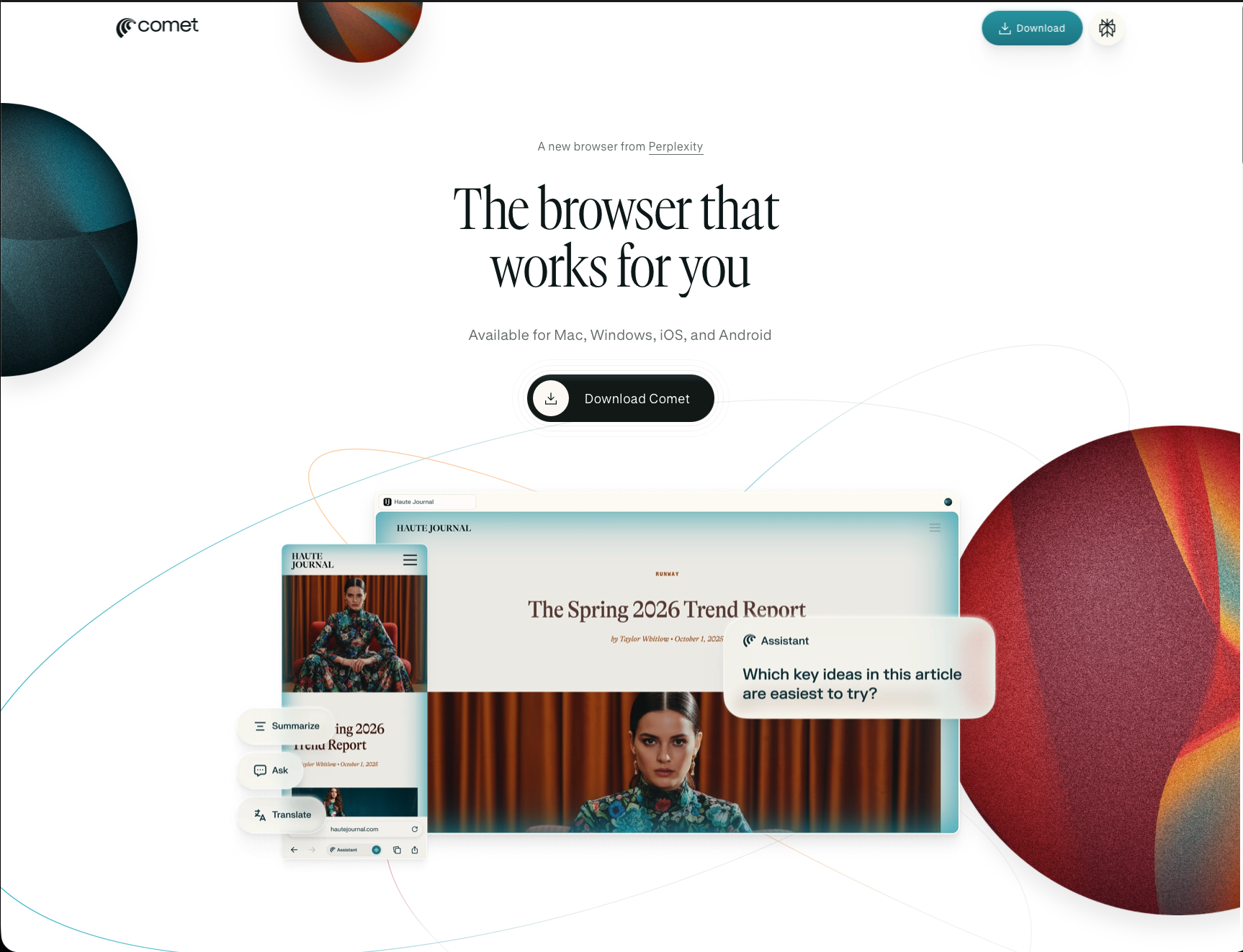
Comet was worse. One tester found Comet using 1.8 GB of RAM with just 10 tabs open, compared to 1.1 GB for Firefox doing the same thing. Other outlets reported Comet running 15 to 20 percent heavier than Chrome. And it can get much worse than that: one Mac mini user watched Comet chew through 10 to 12 GB of RAM on a 16 GB machine before force-quitting it.
It was literally taking up space, memory, and resources for very little benefit. It got to the point where I had to factory restore my own MacBook Pro because the RAM usage slowed my laptop to a crawl and the cache files were eating up my storage and were hidden in "System Storage."
Privacy was becoming something I thought about too much
I know privacy is important and we should all be mindful of how we interact with the internet. But it got to a point where I was using these AI browsers and had to start thinking through things like... should I really check my bank account on this browser? Should I really do my taxes on this browser?
Turns out that instinct wasn't paranoia. In August 2025, Brave's security team disclosed a serious flaw in Perplexity's Comet browser: because Comet fed webpage content straight to its AI without distinguishing user instructions from content on the page, an attacker could hide invisible text on a webpage (white text on a white background, for example) that instructed Comet to go log into the user's email, retrieve a one-time passcode, and hand it over. When Brave first reported it, Perplexity reportedly said they saw "no security impact" and closed the ticket.
That wasn't a one-off. A separate vulnerability nicknamed "CometJacking" showed that a single malicious link could hijack Comet's session and quietly exfiltrate a user's email and calendar data, no credential phishing required, just a click. And months later, researchers found yet another prompt injection bug in Comet that could leak local files off the machine entirely.
I never had anything happen to me, but those questions in the back of my head, and it turns out plenty of security researchers were asking the same ones, led me back to using traditional browsers like Chrome and Safari. This ultimately just got me back to using Safari.
So where does that leave us
None of this means AI browsers are dead. It just means they weren't ready, and I wasn't willing to be the one debugging that in real time with my bank account open in another tab. What I actually wanted from these browsers wasn't a chatbot bolted onto Chrome, it was a browser that understood the web differently. Instead I got beta software wearing a launch announcement. I'll check back in a year. Until then, I'm happy typing this in Safari, RAM untouched, tabs intact. The only thing is that I'm back to searching for promo codes on my own.